
Successful Wiltshire planning appeal for nine homes provides early guidance on NPPF Policy S5
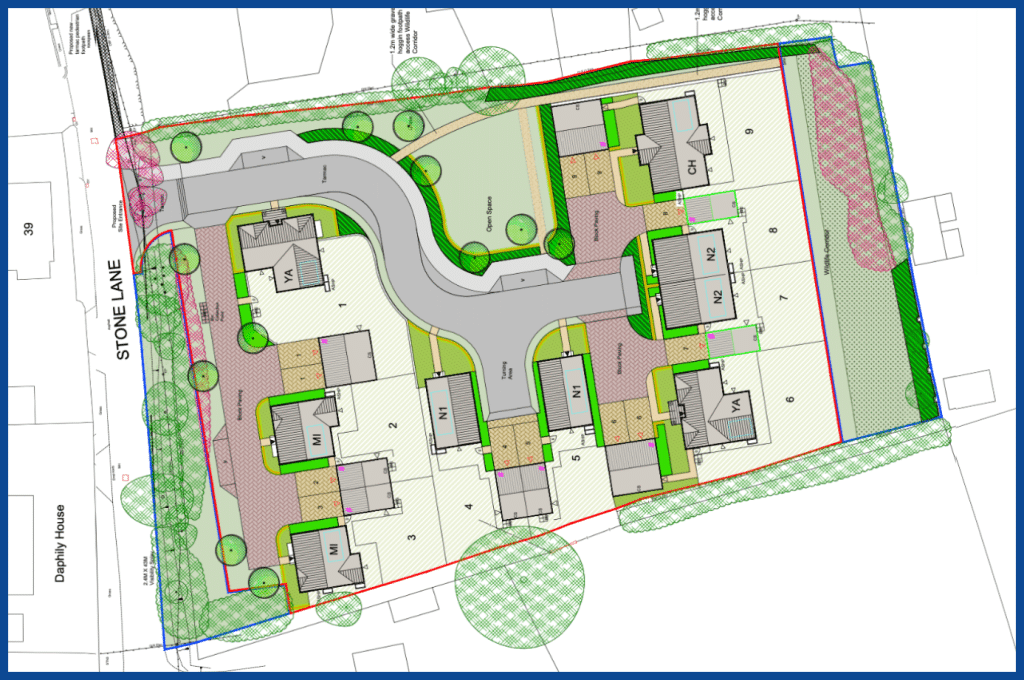
McLoughlin Planning has secured planning permission at Appeal for nine homes on paddock land at Lydiard Millicent, close to the administrative boundary between Wiltshire and Swindon.
The decision is significant beyond the circumstances of the site. Issued less than a month after the Government published its substantially revised National Planning Policy Framework, it is McLoughlin Planning’s first Appeal decision under the August 2026 NPPF and provides an early indication of how Policy S5 may be applied to development outside settlement boundaries.
In particular, the Appeal considered what it means for a site to be “physically well-related to an existing settlement”. The Inspector’s approach demonstrates the importance of assessing a site’s actual relationship with surrounding development, rather than looking only at administrative boundaries or settlement designations.
A site caught between policy and geography
McLoughlin Planning was instructed after Wiltshire Council’s Northern Area Planning Committee refused the original application, despite the planning officer having recommended approval.
The Council’s single reason for refusal raised two connected concerns:
- the principle of residential development outside an identified settlement; and
- whether safe access could be achieved for all users, particularly pedestrians.
The approximately 0.49-hectare site comprised paddock land within Wiltshire, close to the boundary with Swindon Borough. It was unallocated, fell outside any defined settlement boundary and was treated as countryside under the Wiltshire Development Plan. It also lay outside the built area identified in the Lydiard Millicent Neighbourhood Plan. On the policy maps, therefore, its position appeared unpromising.
The site’s physical context presented a more nuanced picture. Although administratively within Wiltshire and separated from the main built form of Lydiard Millicent, it directly adjoined established residential development and related closely to the western urban edge of Swindon. The distinction between the Site’s policy designation and its relationship with development on the ground became central to the Appeal.
A change in national planning policy
When the Appeal was prepared, Wiltshire Council could demonstrate approximately 2.03 years’ supply of deliverable housing land.
The original Appeal case was advanced under paragraph 11(d) of the December 2024 NPPF. It was argued that the delivery of nine homes, the site’s relationship with nearby development and services, environmental enhancements and proposed improvements to pedestrian infrastructure weighed in favour of permission. However, national policy changed while the Appeal was being determined.
The August 2026 NPPF introduced a new suite of national decision-making policies. Policy S5 addresses the principle of development outside settlements and supports certain forms of development where specified requirements are met.
This includes development responding to an evidenced unmet need, expressly including housing where the local planning authority cannot demonstrate a five-year housing land supply. The development must also be physically well-related to an existing settlement and of a scale that can be accommodated by existing or proposed infrastructure.
Wiltshire’s 2.03-year housing land supply meant that the unmet-need element of Policy S5(1)(j) was satisfied. The central question was therefore whether the Appeal site could be considered “physically well-related to an existing settlement”.
What does “physically well-related” mean?
The Council argued that the site was some distance from the principal built form of Lydiard Millicent and did not have a continuous segregated footway. However, the Inspector did not regard either point as determinative.
Importantly, Policy S5 was not interpreted as requiring the site to adjoin the principal built form of one particular settlement. Nor was a continuous segregated pedestrian route treated as an absolute prerequisite.
Instead, the Inspector undertook a practical assessment of the site’s physical relationship with existing settlement development. As we made explicit, the site adjoined established housing, related closely to the developed western edge of Swindon and would benefit from improvements to pedestrian infrastructure. Taken together, these factors were sufficient for the site to be considered physically well-related to an existing settlement for the purposes of Policy S5(1)(j)(i).
Administrative and settlement boundaries remain important. In this case, they gave rise to a clear conflict with the development plan. However, the decision shows that Policy S5 requires a separate assessment of the physical relationships on the ground. Put simply, geography does not stop at a council boundary simply because the policy map does.
Highway concerns considered against the evidence
Highway safety was the second principal issue in the Appeal. The Inspector acknowledged the constraints of the existing access and pedestrian environment. However, the access proposals had evolved during the application process, with amendments to the access position, visibility arrangements and geometry, supported by further technical analysis.
The pedestrian proposals included new sections of footway, dropped kerbs, tactile paving and visibility improvements. There was no objection from the Council’s Highways Officer to the application as submitted, and the further evidence provided through the Appeal reinforced the case that safe and suitable access could be achieved.
The Inspector concluded that the development would provide safe and suitable access for all users and would not have an unacceptable effect on highway safety or result in severe residual cumulative effects on the road network.
The planning balance under the new NPPF
Policy S5 did not remove the development plan conflict. Instead, it affected the weight to be given to that conflict and the structure of the overall planning balance.
The Inspector found that elements of the Wiltshire Core Strategy restricting development outside settlement boundaries were materially inconsistent with Policy S5. To that extent, they were given very limited weight.
Substantial weight was given under Policy HO7 to the delivery of nine homes in an authority with a significant housing land supply shortfall. The proposal’s support under Policy S5(1)(j) attracted significant weight, while its contribution to local services, economic activity and biodiversity enhancements attracted moderate weight collectively.
These considerations outweighed the conflict with the settlement strategy, the loss of undeveloped land and the likelihood that future residents would rely to some extent on private cars. We were delighted for our client that the Appeal was therefore allowed.
What can landowners and developers take from the decision?
This is an Appeal decision based on the particular facts and evidence of the case. It is not a binding legal precedent, and Policy S5 will continue to be applied according to the circumstances of individual sites. Nevertheless, the decision provides a useful early indication of how the policy may operate in practice.
For landowners, developers and promoters considering sites outside settlement boundaries, the key points are:
- The analysis should not end at the policy boundary. A site’s physical relationship with existing development may be different from the position suggested by an administrative or settlement boundary.
- The relevant settlement may not be the one named in the local plan. The relationship with other adjoining or nearby built-up areas may also be relevant.
- “Physically well-related” requires evidence. Adjoining development, pedestrian connectivity, access to services and the character of the surrounding area will require careful assessment.
- Housing need can materially affect the planning balance. Where an authority cannot demonstrate a five-year housing land supply, Policy S5 may provide support for development responding to that unmet need.
- Access and infrastructure remain important. A favourable position under Policy S5 will not overcome unresolved highway, accessibility or infrastructure concerns.
- Each case will remain site-specific. Policy S5 does not provide automatic support for every site outside a settlement boundary.
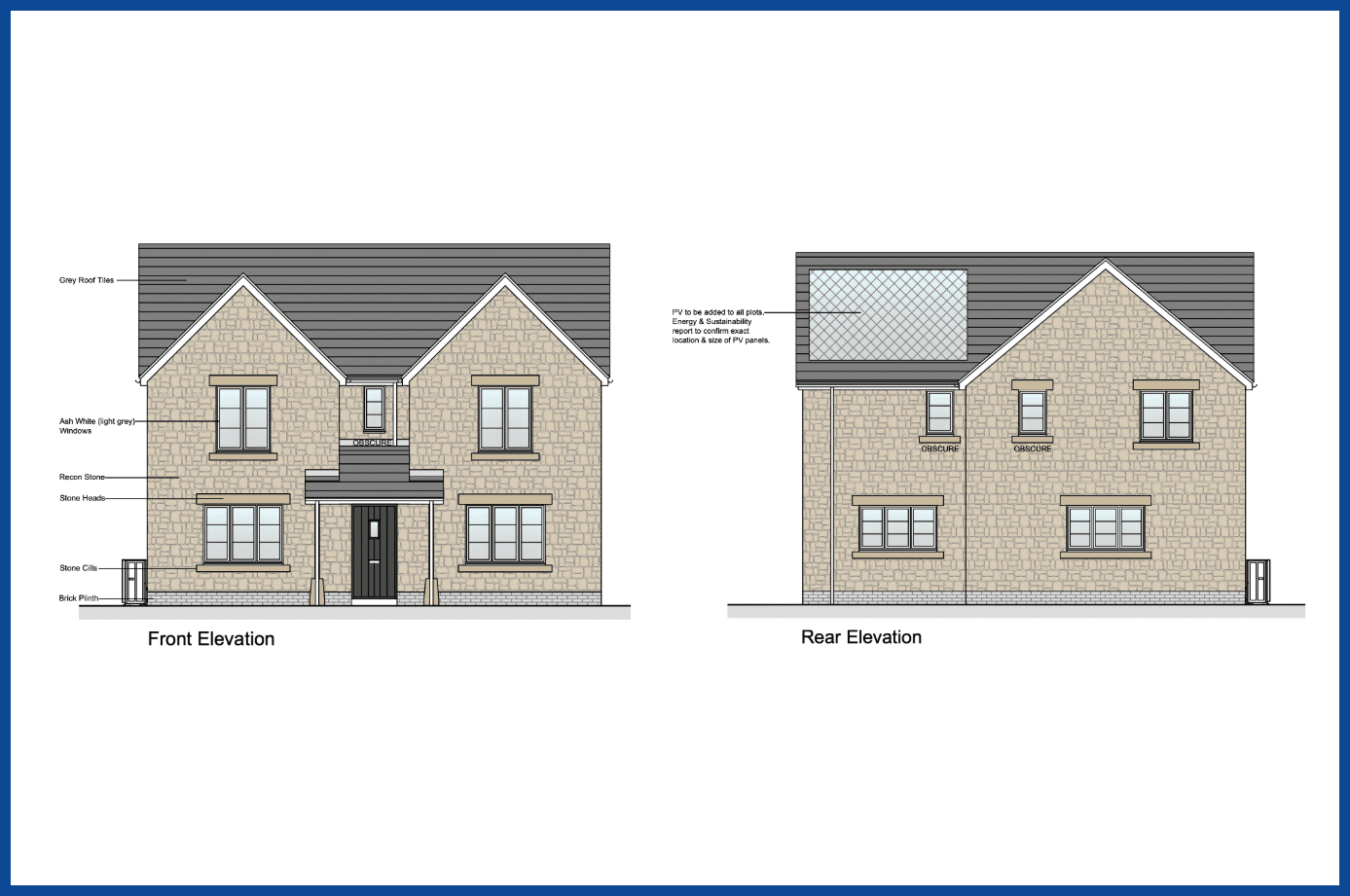
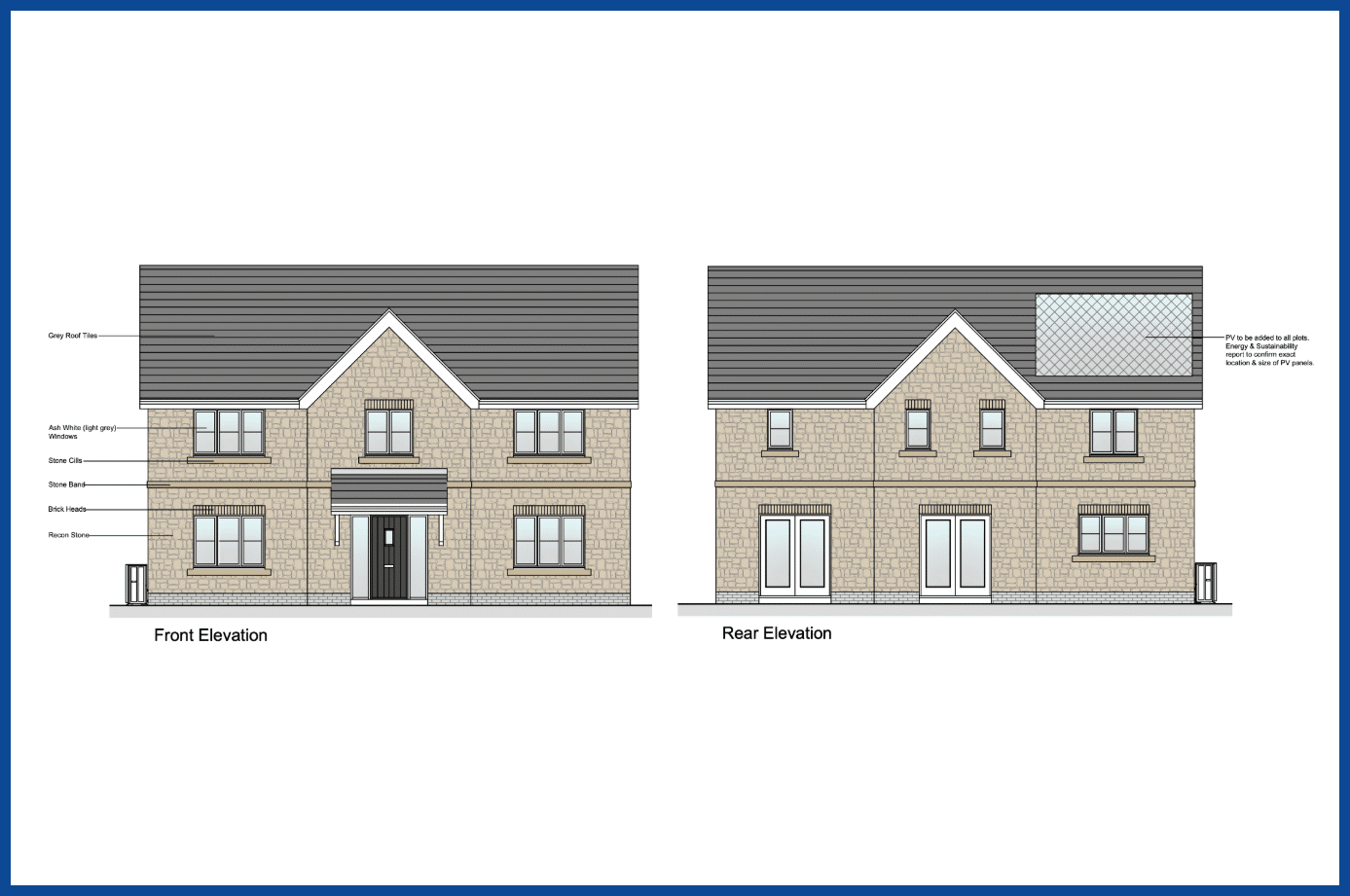
We are absolutely delighted that this considered and well-designed scheme will now be realised, bringing much needed new housing in a sustainable location.
Image source: David Jarvis Associates
Working with McLoughlin Planning
McLoughlin Planning advises landowners, developers and promoters on strategic and complex development opportunities, from initial site appraisal and land promotion through to planning applications and appeals.
We are part of the MLP Group alongside Plainview Planning, which joined the Group in 2024. McLoughlin Planning typically advises on larger, strategic and more complex proposals, while Plainview Planning provides dedicated support for householder projects, smaller residential developments and independent commercial schemes.
If you are considering land affected by settlement-boundary, housing-land-supply or other strategic planning issues, please contact Polly Mason, Associate Director, on 01242 895008 or at polly.mason@mplanning.co.uk.
You can also find out more about our team on our About Us page or contact McLoughlin Planning to Arrange a Call.
The planning policy position described in this article was correct at the time of publication. Planning policy and its interpretation may change. Please contact our team for advice on the current position.