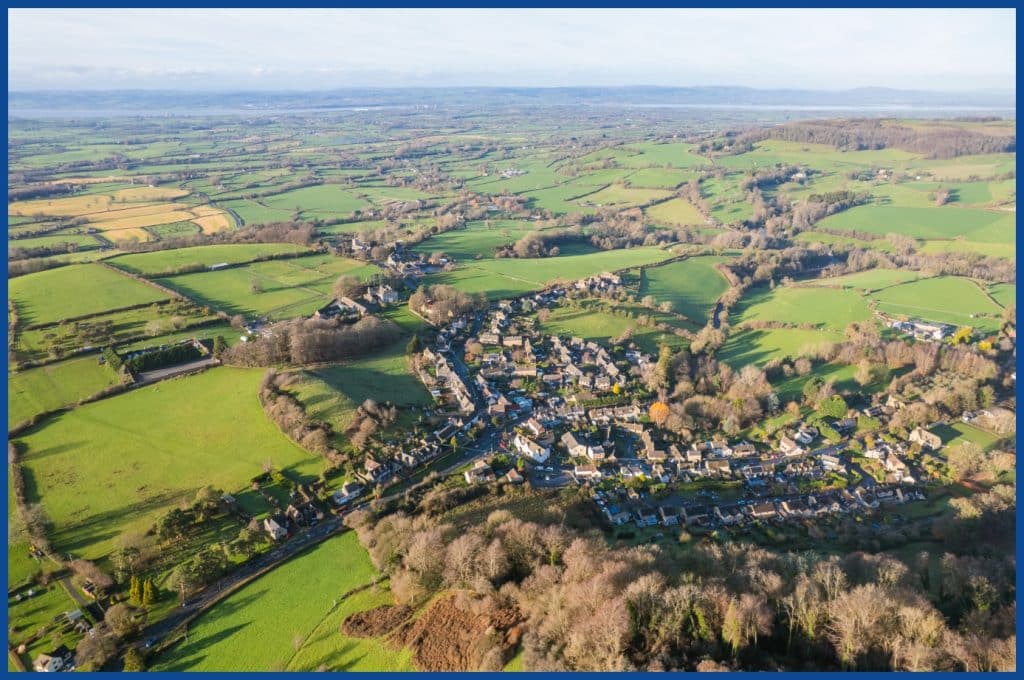
Kent housing development: Reserved Matters planning approval secured for 32 new homes in Swanley. Our Group provided the planning strategy, prepared the outline planning application, secured approval at appeal and provided guidance on design, access, drainage and landscaping. 

What does the application deliver?

We have recently secured Reserved Matters planning approval for a development in Swanley, Kent, comprising 8 houses and 24 apartments – a total of 32 new homes. The submission addressed the reserved matters of layout, access, scale, appearance, landscaping and drainage, following the earlier outline consent. 

What to do when the planning policy landscape changes between planning application submissions

We secured outline planning permission for the site at appeal, which unlocked its development potential. Following the appeal win, the planning context in Sevenoaks has shifted considerably.  For example: 

  • The District Council does not have an up-to-date Local Plan, relying instead on policies dating back to 2011 and 2015. 
  • Following the revised NPPF (December 2024), the housing requirement rose from around 704 to 1,149 dwellings annually – an increase of 63%. 
  • The Housing Delivery Test result stands at 44%, which means that the presumption in favour of sustainable development is engaged. 
  • The Council cannot demonstrate a five-year housing land supply, falling well short of national policy expectations. 
  • While the district is significantly constrained by Green Belt, this site sits outside this designation, reinforcing its suitability for residential use. 

This evolving policy position places greater emphasis on the careful interpretation and application of the NPPF, particularly the presumption in favour of sustainable development. 

How did we respond to planning policy shifts post-submission?

We worked closely with the Case Officer to refine the proposals, incorporating: 

  • Updated site plans to reflect urban design advice; 
  • A drainage assessment note meeting relevant requirements; 
  • An improved landscape plan following arboricultural input. 

This collaborative process helped to ensure that the submission met policy requirements and was positively received. We are delighted that the full development potential of this site has been unlocked and that a quality housing scheme can now be realised.  

What Ongoing Project Management Do We Provide? 

Our involvement extends beyond securing permission. For projects of this nature, we provide: 

  • Pre-application advice to identify risks and opportunities; 
  • Ongoing engagement with council officers and consultees; 
  • Collaboration, review and submission of revised plans and supporting reports; 
  • Full project management through to implementation. 

This approach supports clients in navigating the technical, design and policy challenges that arise from appeal-led and complex sites. 

How we can help

At McLoughlin Planning, our simple objective is to get results for our clients by providing high-quality planning consultancy. Our team of chartered town planning consultants delivers strategic advice and planning solutions across southern England and Wales – from strategic land promotions and commercial premises to private developments and rural projects.

Since joining forces with Plainview Planning in 2024, our Group combines expertise across 13 planning professionals and support staff. This collaboration allows us to provide ingenious, commercially-minded solutions to a wide range of town planning challenges.

  • For larger, strategic or complex projects (such as land promotions, multi-phase developments, aviation schemes), please contact our McLoughlin Planning team.

  • For householder projects, developments of 10 units or fewer, or smaller independent commercial projects, our specialist Plainview Planning team can help.

Contact us

If you have a development project which would benefit from expert planning consultancy input, then feel free to view our full ‘About Us’ page to view which of our planning consultants best fit your needs and contact us through either our ‘Arrange a Call‘ tab on our contact page or via the email and telephone number provided below.  

We value your privacy and any information which you provide will not be shared outside of our company and will only be used in relation to your enquiry. 

As always, the content of this article was correct at the time of publication, but for the most up-to-date information on planning topics and policy queries, contact our team.    

Polly Mason – Associate Director

  • T: 01242 895008
  • E: polly.mason@mplanning.co.uk 

Project team

  • LPA – Sevenoaks District Council  
  • McLoughlin Planning and Plainview Planning (Planning Consultants)
  • Urban and Rural Ltd (Architect)  
  • Motion (Highways and Transport) 
  • Simpson Consulting Engineers (Engineering)  
  • Furse Landscape Architects Ltd (Landscape) 
  • LPA – Sevenoaks District Council  

Image source: Urban and Rural 


Today marks the next step in preparing the West Oxfordshire Local Plan, with the publication of the Draft Preferred Policy Options Paper. It is on consultation until 8th August, and looking at it from a housing standpoint, the key points of the Plan are set out below. 

Settlement hierarchy in West Oxfordshire 

For those familiar with the current Local Plan, it’s very much business as usual, with the settlement hierarchy from the current Plan carried forward into the new Plan. In terms of strategy, the Plan proposes to align growth with existing and planned infrastructure and seeks to sustain the vitality of local communities (amongst other things). In terms of scale, the terminology used in the Plan is as follows: 

  • Small scale – 1 to 10 dwellings 
  • Medium scale – 10 to 300 dwellings 
  • Strategic scale – 300 plus dwellings 

This is deployed as follows: 

  • Principal Towns will remain the focus for growth, looking to accommodate small, medium and strategic scale development sites. 
  • Service Centres—The focus will be on proportionate growth appropriate to the size of the settlement, with a focus on small—and medium-scale development. 
  • Villages – a focus on smaller levels of growth, looking for small and medium-sized sites which are of a more limited scale than Service Centre locations. 
  • Small Villages and Hamlets – development is limited to those that require a rural location. 

This approach to settlement expansion is complemented by focusing growth along “key strategic corridors”, which in West Oxfordshire terms means the A40 and the A44 (Chipping Norton and Woodstock). 

Housing need – 16,000 homes for West Oxfordshire 

The new Standard Method calculation saw a dramatic increase in the District’s housing requirement, rising to 905 dpa, equating to 14,480 homes over the Plan Period. It is welcome that the Plan aims to meet this in full. In addition, the Plan looks to add an additional 10% buffer, taking the planned supply to 16,000 homes. There may be a need for further upward expansion to take account of Oxford City’s unmet needs following the recent failure of the Local Plan. In terms of supply composition, the following should be noted: 

  • 11,700 to come forward from allocations (5,200 from the 2031 Plan and 6,500 new allocations from the 2041 Plan) 
  • 1950 from windfall allowance (150 pa 2028 to 2041). 

Where are the new site allocations? 

The Reg 18 consultation does not contain any new site allocations, which is conspicuous by its absence. Instead, it is a demonstration of the Council’s emerging thinking on the overall direction of travel. The Plan makes clear that there will be another focused consultation on potential development sites towards the end of 2025. 

West Oxfordshire’s Local Plan update – what this means for developers and landowners

The plan clearly shows considerable stability in the development strategy approach and settlement hierarchy, which is to be welcomed. Given the lack of site-specific allocations and a high housing target, which will rise subject to understanding Oxford’s unmet needs, there is a clear opportunity to promote sites for development. We have extensive experience in the District and would be happy to discuss any future options with you. In the meantime, you can find out more about our relevant experience here.  

How we can help

If you have a site which you think might have development potential in the West Oxfordshire area, then feel free to come and talk to us about what you are looking to bring forward and to find our more about how we can best assist. 

Nathan McLoughlin – Managing Director 

T: 01242895008 

E: nathan.mcloughlin@mplanning.co.uk 

About us

We are McLoughlin Planning, and our team has a simple objective: to get results for our clients by providing high quality planning consultancy. 

Our reputation for integrity, innovation and intelligence means we are a growing business, thriving on personal recommendations from our loyal clients and trusted industry colleagues. Our team of chartered town planning consultants deal with a host of interesting planning projects from across southern England and Wales – from strategic promotions and commercial premises to private developments and rural projects. 

We are a friendly and approachable team who care passionately about the built environment, always striving to get the best outcome for our clients and the community. Find out more about us here. 

McLoughlin Planning is delighted to confirm that we have successfully appealed a refusal of planning permission for alterations and extensions to a dwelling in the desirable Moor Park Estate, Hertfordshire.  

The scheme sought a myriad of works, including the demolition of an existing garage, workshop and front canopy; and the construction of a two-storey side and rear extension.  The key planning issue was the effect of the proposed development upon the character and appearance of the existing building and the area, including the Moor Park Conservation Area.  

Preparing a suitable strategy following the refusal of planning permission  

We were approached to assist following a refusal of planning permission for the scheme. Three Rivers District Council were content with the more minor elements of the design but felt that the proposed extensions would negatively impact the Conservation Area.  

Following a review of the planning submission as a whole, along with the relevant plan policies and pertinent precedents, we advised our client to appeal the planning decision.  A significant part of our reasoning behind this was that we felt that the Council’s concerns were based solely on a prescriptive interpretation of their Conservation Area (CA) Appraisal, which aimed to maintain spaces between detached properties. The Inspector agreed with our interpretation, identifying that:  

“The CA Appraisal explains these design standards are to maintain the open character of the estate and avoid the overdevelopment of plots. As I have found that the proposed development would achieve this, it is not necessary to forensically examine whether the proposal would exactly meet the design standards listed in the CA Appraisal.”  

This is an important reminder that policies and guidance should not be taken so literally.  In this case, the CA Appraisal insisted that a 2.5m space to the side of the property should remain.  

Even though the residual space proposed was less than this, the extensions were subservient to the main dwelling, designed to a high standard for the CA and they still maintained a space to allow visibility between plots. These points were, in the Inspector’s view, more important to the preservation of the CA than insisting on the prescriptive distances in the CA Appraisal.   

What happens after a planning application is refused?

If you have had your application for planning permission refused or have been informed by your local Council that a refusal is imminent – it may not necessarily mean the end of the line for your development aspirations.  If you have received a planning refusal, then in the first instance, review the decision notice and officer’s report.  These will give you the reasons for refusal and any perceived planning issues which may need to be resolved.  A planning consultant can advise on the severity of these reasons, and whether they can be navigated or mitigated.   

Once you understand why the application has been refused, you can then choose the appropriate planning strategy, be that a planning appeal, or a revised scheme and resubmission.  Alternatively, your application may still be live, but you are aware that a refusal is pending, in which case negotiation with the case officer and relevant stakeholders will be key.  

Which route to take and the requirements of each is something our planning consultants specialise in.  Feel free to contact the team at McLoughlin Planning to discuss your project and find out how we can best assist.   

How we can help

We are McLoughlin Planning, and our team has a simple objective: to get results for our clients by providing high-quality planning consultancy.   

Our team of chartered town planning consultants deal with a host of interesting planning projects from across southern England and Wales – from strategic promotions and commercial premises to private developments and rural projects.   

We are a friendly and approachable team who care passionately about the built environment, always striving to get the best outcome for our clients and the community.   

If you have a development project which would benefit from expert planning consultancy input, then feel free to view our full About Us’ page to view which of our planning consultants best fit your needs and contact us through either our Arrange a Call tab on our contact page or via the email and telephone number provided below. 


Joe Seymour – Associate Director  

E:  joe.seymour@mplanning.co.uk  

T: 01242 895 121  


Image source: Seabrook Architects  

McLoughlin Planning has successfully secured Technical Details Consent (TDC) to construct 2 x 4-bed dwellings in the village of Driffield, a non-principal settlement near Cirencester. This is following the successful grant of Permission in Principle (PiP) at Cotswold District Council’s Planning Committee.

What is Permission in Principle (PiP)?

Permission in Principle is a planning consent route which was introduced in 2018.  It is an alternative way of obtaining planning permission for housing-led development and it separates the consideration of matters of principle for proposed development (location, uses and amount of development), from the technical detail of the of the development (everything else, including planning conditions, s.106 and BNG).

The PiP stage acts like a watered-down outline planning application, and it can prove a useful tool if you want to get a clearer idea of whether development on site may be acceptable in principle, without the need for submitting costly reports from the outset.

The Technical Details Consent is more akin to a full planning application and as such, requires the submission of detailed reports, including full details of layout, scale, landscaping, appearance, and access.

Technical Details Consent (TDC) and Biodiversity Net Gain (BNG)

The most notable aspect of this TDC approval is that off-site Biodiversity Net Gain (BNG) credits needed to be sourced from a third-party organisation. This is because the site was not large enough to achieve the statutory 10% BNG uplift within the site boundary. Once a quote for off-site BNG credits was obtained, this was enough for the Council to grant planning permission, subject to an informative stating that development cannot commence until a BNG Plan has been submitted to and approved by the Council.

This will now be commonplace for small-scale housebuilders and developers as the sites they typically develop will not be large enough to construct dwelling(s) and have sufficient residual space to achieve a 10% BNG uplift on site. Therefore, sourcing off-site BNG credits is now becoming an essential part of obtaining planning permission.

How we can help

Are you looking to obtain planning permission for small-scale residential development? Do you need to source off-site BNG credits for your development? If so, then please contact us through either our “Arrange a Call” tab on our contact page or via the email and telephone number provided below.

Joe Seymour – Associate Director

E:  joe.seymour@mplanning.co.uk

T: 01242 895 121


Project team

  • K-Ten Consulting (Drainage)
  • All Ecology (Ecology)
  • Wotton Tree Consultancy (Arboriculture)
  • Core Geotechnics Ltd (Geology)
  • Andrew P Jones (Development Consultants)

Image Source: Andrew P Jones Associates


About us

We are McLoughlin Planning, and our team has a simple objective: to get results for our clients by providing high quality planning consultancy.

Our reputation for integrity, innovation and intelligence means we are a growing business, thriving on personal recommendations from our loyal clients and trusted industry colleagues. Our team of chartered town planning consultants deal with a host of interesting planning projects from across southern England and Wales – from strategic promotions and commercial premises to private developments and rural projects.

We are a friendly and approachable team who care passionately about the built environment, always striving to get the best outcome for our clients and the community.

Please view our full About Us’ page to view which of our planning consultants would best fit your needs.

We are delighted that following our involvement, planning permission has been secured for the erection of six new apartments in the heart of Cinderford.

Identifying the development potential of brownfield land   

It was an interesting site, located within the development boundary of Cinderford and previously associated with commercial uses.  But it was also an irregular shape, bounded by commercial and residential units, and had a recent planning refusal for a similar scheme on site.

It seemed to be heading in a similar direction again as, prior to our involvement in the project, the applicant had received negative feedback from the planning officer on the latest application.  Fearing a planning refusal and not sure how to most effectively respond to the comments received, we were approached and asked by the applicant to review the case officer’s commentary to date, provide guidance on how best to amend the scheme and to prepare supporting evidence/mitigation measures to help navigate the proposals to a positive outcome.

Key planning considerations for residential development on a brownfield site

 Given the complexities of the space, key planning considerations included:

  • technical requirements (such as parking, and internal room standards);
  • residential amenity considerations;
  • contamination;
  • siting;
  • relationship of the development with neighbouring commercial uses;
  • how the design would respond to local vernacular; and
  • ecological requirements.

We provided the project team with a critical analysis of both the planning policy requirements and the feedback from the officer and weighed this against the proposed development. Our input helped to ensure that the redesign met the technical requirements set out in both local and national policy documents.

Clever design solutions and a strategic planning approach can unlock the development potential of a challenging plot

It was great to be working on the scheme with Edge Design Workshop.  Their considered revisions to the scheme included: removal of a disused MEB building to unlock more of the site; clever design of the housing units to ensure space standards and amenity space requirements were amply met; suitable parking provision for both existing and future residents; design amends to remove the risk of overlooking.

Alongside our advice to the architect, the applicant also commissioned us to write a planning statement, clearly highlighting the previous concerns from the case officer and how these have been addressed in the revised proposal.

The Council remained co-operative throughout the process and ensured a fair assessment of the Site and the revisions undertaken. The result was a positive conclusion, unlocking a valuable brownfield site for the delivery of much needed new homes in Cinderford.

We are so pleased with the outcome, and that through our careful analysis of planning policy and context, effective engagement with the project team and the presentation of a clear and considered planning strategy – this dilapidated site will now be regenerated to the benefit of the local area and will bring new, stylish apartments to a central and sustainable location.

How we can help

If you have a brownfield site, are wondering about its development potential and would like a member of our team to review your case and explore whether there is a way forward to secure planning approval for your project, then please contact us through either our “Arrange a Call” tab on our contact page or via the email and telephone number provided below:

Chris Moore – Director

T: 01242895008

E: chris.moore@mplanning.co.uk


Image source: Edge Design Workshop (2024)